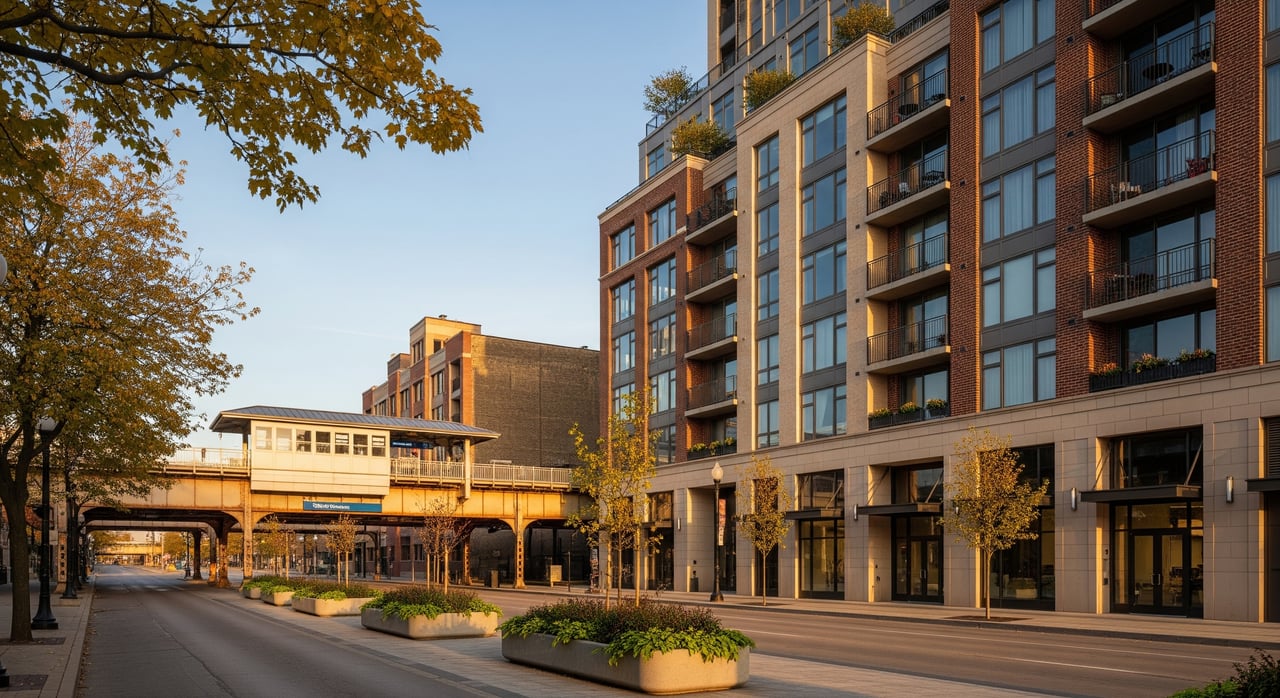
Transit-Oriented Development Near Jefferson Park Station
November 6, 2025
November 6, 2025
Looking at small infill or an adaptive reuse near Jefferson Park and trying to make the numbers work? You are not alone. The area’s transit access can unlock parking relief and smarter designs that improve feasibility, but only if you understand Chicago’s Transit‑Served Location rules and the local context. In this guide, you’ll learn how TSL works around Jefferson Park, what to verify before you bid on a parcel, and the design and parking strategies that fit this market. Let’s dive in.
Chicago’s zoning code recognizes Transit‑Served Locations that offer development incentives near transit. These provisions can reduce or waive some automobile parking minimums and may open the door to added density in certain cases. Your job is to verify exactly which rules apply to your parcel and whether any overlays or prior approvals change the baseline.
Start by confirming whether your site falls inside the official TSL that covers Jefferson Park. Review the City of Chicago’s zoning code and official TSL map. Also check for station‑specific overlays, planned developments, or prior approvals that could alter base rights on your site.
Within a TSL, parking minimums often drop. Some projects can access shared or mixed‑use parking exceptions and bicycle parking substitutions. You should also verify multi‑modal requirements like off‑street loading, short‑term guest parking, and bike parking minimums.
If you pursue higher density or additional height, expect potential design review, public benefits, or affordable housing obligations. Planned developments require a public process. Confirm whether your concept triggers any of these steps so you can scope time and costs correctly.
Jefferson Park is a multimodal hub served by CTA Blue Line rapid transit, Metra commuter rail, and multiple bus routes. This level of connectivity strengthens the station’s TOD potential compared with single‑line stations. The station area includes a transfer hub and surface park‑and‑ride lots.
Multiple transit modes expand your renter and buyer pool to include commuters and car‑light households. If your project reduces parking, you can pair that with strong Transportation Demand Management to maintain marketability. The hub’s visibility can also support small mixed‑use on corner sites.
You will find small commercial parcels with 1–3 story buildings, surface parking lots, and long, narrow lots along major corridors like Milwaukee Avenue. Institutional properties, CTA or Metra parcels, and rail‑adjacent sites can bring easements or structural constraints. Right‑of‑way and elevated structures may limit buildable area or affect loading and access design.
Review any Jefferson Park neighborhood or corridor plan issued by the city or the alderman’s office. Recent planned development cases and community meeting notes are a window into local sentiment on height, density, and parking. This context informs whether by‑right infill or a public process is the better path.
Parking drives both cost and unit count. In small projects, structured parking can be cost‑prohibitive, while surface parking consumes valuable land. TSL relief can lower hard and soft costs and improve feasibility, but you must balance that with market expectations in this submarket.
Less structured parking means less excavation, fewer ramps, and smaller footprints for stairs and elevators that serve parking levels. That reduces both construction and design complexity. The tradeoff is marketability for car‑reliant households, which are more common here than in downtown neighborhoods. Test demand assumptions before you finalize the mix.
Near transit, you can lean into studios, one‑bedrooms, and smaller two‑bedrooms aimed at transit riders, singles, and downsizers. Family‑oriented formats like townhomes often need more parking and ground‑level open space. Align the mix with the neighborhood’s absorption patterns and price sensitivity.
Consider a small number of on‑site spaces paired with unbundled parking, so only those who need a space pay for it. Evaluate shared parking agreements with nearby uses that peak at different times. Add EV charging, secure indoor bike storage, and transit pass support as part of a full Transportation Demand Management package.
Sites near the bus hub and rail lines demand careful circulation planning. You need to prevent conflicts with bus turning movements and station operations while maintaining safe resident access.
Study curb regulations and plan for trash, deliveries, and move‑ins without disrupting transit. Where alleys are available, lean on them to reduce curb conflict. If alley access is limited, incorporate on‑site loading that clears sightlines and meets city standards.
Secure indoor bike parking and short‑term racks are now standard expectations. Consider charging outlets for e‑bikes and scooters. These features support lower car ownership and strengthen your case for reduced parking.
Several small‑scale plays recur around Jefferson Park. Each requires site‑specific due diligence on ownership, leases, and zoning.
Look for underused surface parking or single‑story commercial parcels within a 5 to 10 minute walk of the station. Mid‑block sites can fit stacked flats or courtyard apartments with minimal or no structured parking. Corner sites may support small mixed‑use with ground‑floor retail or live/work units.
Older commercial buildings can convert to residential while keeping active ground floor uses. Where zoning allows, adding 2–4 stories above the base can be a cost‑effective way to capture value with modest parking.
Some large lots are controlled by transit agencies or subject to long‑term leases. If you are exploring air rights or joint development, contact CTA and Metra real estate staff early. These deals can be rewarding but often require longer timelines and complex negotiations.
Use this quick screen before you commit to a letter of intent.
Authoritative sources will save you time and rework.
Spot these issues before they derail your pro forma.
You can keep early steps lean and targeted.
Confirm zoning, TSL status, and any overlays. Outline parking minimums and potential reductions in a one‑page entitlement snapshot.
Validate ownership and any leases or easements. Order a preliminary title report and engage a surveyor for basic dimensions and constraints.
Build two quick test fits: a reduced‑parking scheme with strong TDM and a conservative scheme with more on‑site parking. Compare unit counts, construction costs, and achievable rents to see which path clears return hurdles.
If you want a market‑grounded second opinion on your test fits or a review of local sentiment and recent PD cases, let’s connect. You can move from concept to site control with clear, realistic assumptions.
Ready to evaluate a Jefferson Park opportunity? Connect with Unknown Company to get your complimentary valuation and expert consultation.
Stay up to date on the latest real estate trends.


Reach out to explore your goals. I’m here to offer insight, professionalism, and a refined real estate experience.