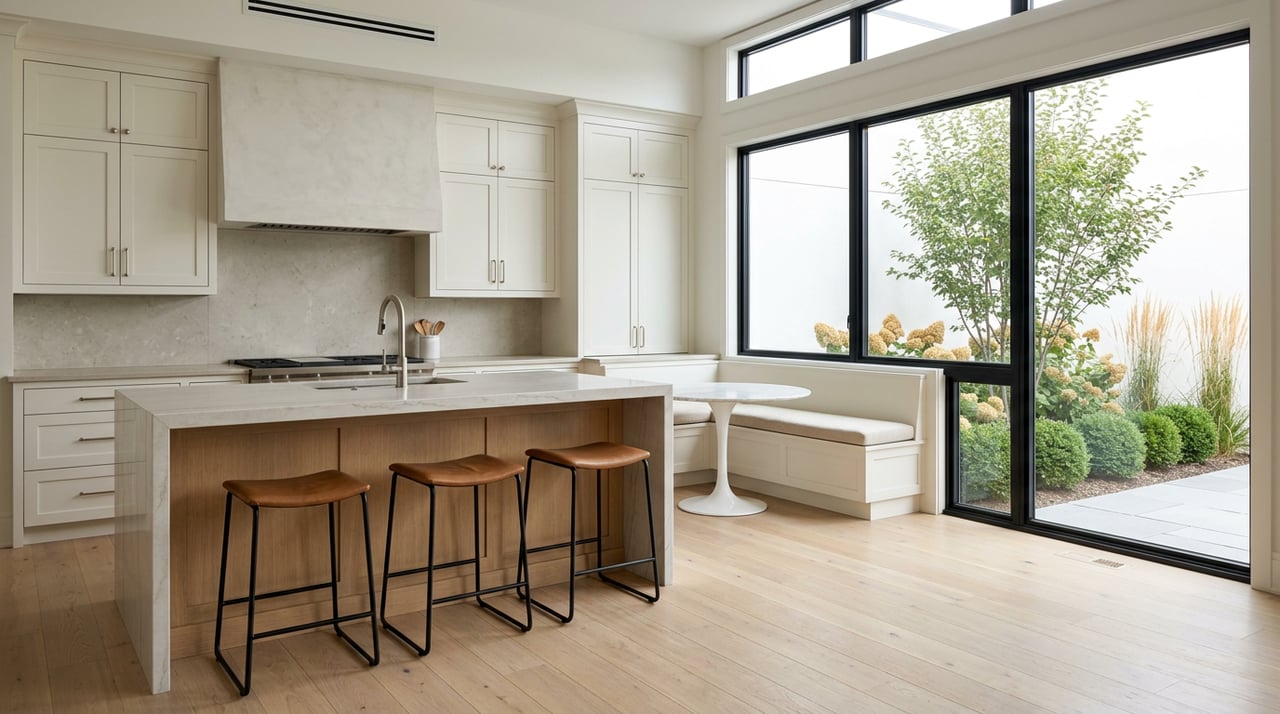
Glenview Relocation Guide: Moving from Chicago to the Suburbs
March 5, 2026
March 5, 2026
Thinking about trading your city condo for more space, a yard, and weekend parks in Glenview? You are not alone. Many Chicago families eye Glenview for its blend of suburban calm and real-world commute options. In this guide, you will learn what your budget can buy, how to plan the commute, what to expect for taxes and utilities, how to compare neighborhoods and schools, and how to time your sale and purchase. Let’s dive in.
Glenview sits about 18 to 20 miles north of the Loop with a village feel, a busy park system, and a signature town center called The Glen. You will find a mix of established single-family streets, newer luxury pockets, and walkable options near shops and Metra. The Village highlights family amenities, commuter access, and resident services on its visitor and resident pages, which is helpful as you plan your move. Explore the village overview and commuter info on the Village of Glenview’s site to see how the pieces fit together.
Recent trackers show a wide range for Glenview’s “typical” values because they measure different mixes of condos and single-family homes over different time windows. For example, Redfin’s market snapshot reported a median sale price near 740,000 in early 2026, while Zillow’s index put the typical home value closer to 633,500. Treat these as context rather than a single number and ask for recent sold comps in the exact neighborhood or school boundary you prefer.
Here is a practical way to think about price bands:
Market speed and negotiation power shift seasonally. Keep an eye on days on market and sale-to-list ratios on one of the major trackers, and ask your agent for a micro-level view by school area.
Two Metra MD-N stations serve Glenview: downtown Glenview and North Glenview (The Glen area), both in Zone 3. Typical train rides to Chicago Union Station often land in the 30 to 45 minute range, depending on whether you catch an express or local. Check schedules, parking, and permit details on Metra’s station page. Driving times vary widely with traffic. Many families report 20 to 40 minutes off-peak to downtown, longer at rush hour. O’Hare is commonly about 20 to 30 minutes by car from central Glenview, route and time dependent. Pace buses connect neighborhoods, shopping, and both Metra stops.
Property taxes in Glenview are part of Cook County and tend to be higher than the U.S. median. A recent aggregator estimated an effective residential rate near 1.7 to 1.8 percent, with one summary showing about 1.78 percent and a median annual bill around 8,400. Use the Cook County Assessor to review assessed value and exemptions for a specific address. You can also verify bills and payment history through county portals during due diligence. For a general benchmark, see the local estimate on Ownwell’s Glenview summary.
Sales tax runs higher than the Illinois state base because of county and special district components. Combined rates in Glenview commonly run near 9.75 percent, with some subareas closer to 10 to 10.75 percent. You can check a ZIP-specific rate, such as 60026, using Avalara’s lookup or an Illinois Department of Revenue tool.
Utilities and services: Electricity is typically delivered by ComEd and natural gas by Nicor Gas in this region. Water, sewer, and municipal trash or recycling are administered or contracted by the Village. Review the service pages and schedules on the Village website. If you are moving from a smaller Chicago apartment to a larger Glenview single-family home, expect higher heating and cooling usage and a water bill that reflects outdoor needs.
Common monthly line items to budget for:
Ask for 12-month utility histories from the seller during due diligence to remove guesswork.
Glenview offers distinct lifestyle pockets:
Schools: Most elementary and middle schools fall under District 34, and high school students typically attend Glenbrook District 225 schools. Review district pages and state report-card summaries for a neutral read on performance and programs. Several District 34 schools have received exemplary or commendable designations in recent state report-card summaries. Start with District 34’s report-card overview: Glenview 34 report cards. Always verify attendance boundaries through the district and confirm registration timelines directly.
| What you gain | What you trade off |
|---|---|
| More space and access to parks. The Glenview Park District operates dozens of parks, aquatic centers, and family programs. See the Glenview Park District. | Some days bring longer commute times compared with many city neighborhoods. Typical MD-N train rides are often 30 to 45 minutes. See Metra schedules. |
| Multiple commute options. Two Zone 3 Metra stops plus Pace bus links offer flexibility for hybrid schedules. See Metra station info. | Higher property taxes than the U.S. median in many cases. An aggregator estimates about 1.78 percent effective rate. See Ownwell’s summary. |
| Family-friendly amenities and programs across seasons. Explore parks, camps, ice, and pools at the Park District. | Higher combined sales tax than the state base in several ZIPs, often near 9.75 percent. Check a ZIP rate like 60026 on Avalara. |
Use this short checklist to compare neighborhoods and homes like a pro:
Expect about 30 to 45 days from contract to close for most financed purchases, with cash closing faster. Build in buffers for inspection, appraisal, and underwriting. For a general overview of closing timelines and buyer prep, see this summary of real estate basics: Homeward real estate 101. Spring often brings more listings, but the best timing for you depends on interest rates, inventory, and how quickly homes are moving in your target area.
Common coordination paths for city-to-suburb moves:
Three to six months before you plan to bid, refresh your pre-approval so you can act quickly. Pre-approvals often expire in 60 to 90 days, so plan to update as you shop. If school enrollment matters for next year, track district registration windows in spring and early summer on district pages.
Keep surprises out of your move with a simple plan:
Ready to explore Glenview with a calm, no-pressure plan that fits your family? Tap into three decades of local insight, curated marketing for your sale, and end-to-end relocation support with Cornelia Matache. Let’s make your move smooth, confident, and on your timeline.
Stay up to date on the latest real estate trends.

Reach out to explore your goals. I’m here to offer insight, professionalism, and a refined real estate experience.